.avif)




With the growing digitalisation of services and the shift in consumer behaviour, lawyers can no longer do without an effective digital marketing strategy. In 2025, people look for legal services online first, whether through Google, social media or specialist directories. The challenge for a lawyer is to stand out in a fiercely competitive market and to stop losing prospects who never find them.
This article explains how a lawyer can use digital marketing, the best practices for becoming known online, and how to measure the impact of what you do.
For more on this, feel free to download the full guide
Can a lawyer advertise?
Yes, a lawyer can advertise, but within the bounds of professional ethics. Advertising by lawyers is governed by strict rules meant to protect the reputation of the profession and to rule out any misleading or aggressive promotion.
Read the relevant article here.
The rules governing lawyer advertising
Lawyers are allowed to promote their services, but they have to respect several principles: dignity, moderation and transparency. Advertising must never be misleading or trivialising. Exaggerated commercial language, for instance, is off limits. Lawyers also have to avoid soliciting clients directly, by phone, by unsolicited email and so on.
The forms of advertising that are allowed
- Online advertising: Building a professional, active website is critical. It has to carry clear information about the services offered, the areas of specialism and the team. It can also include client testimonials or blog articles that demonstrate expertise. Lawyers can list themselves in specialist directories, so people can find them more easily.
- Social media: Using LinkedIn, Instagram, or Facebook to share educational content, legal news or testimonials is another effective way to promote a firm.
What digital marketing specifically brings to lawyers
Digital marketing offers considerable advantages to lawyers, in terms of visibility, client retention and lead generation.
Greater visibility
By adopting a strategy for SEO (organic search), a lawyer becomes easy to find for prospects searching for legal services on Google. That widens the firm's visibility beyond its local area, and it brings in a targeted audience.
For more on this, feel free to download the full guide
{{cta="/cta"}}
Standing apart in a competitive sector
The legal sector is highly competitive, and every lawyer needs a strategy to stand apart. Digital marketing is what makes that possible, through quality content on a blog, explanatory videos or client testimonials. Content like this shows expertise and builds a connection with the audience.
Lead generation and client retention
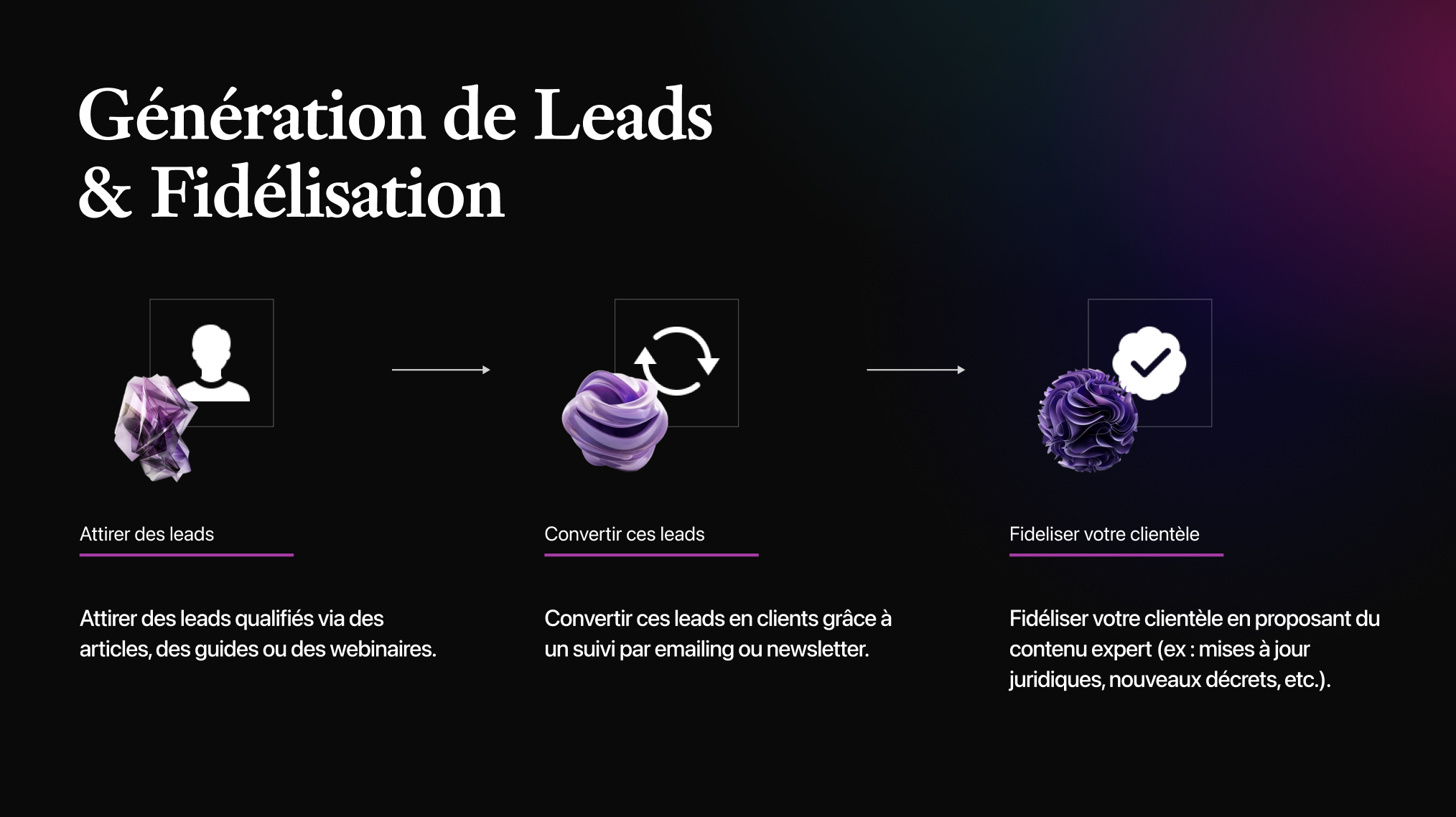
With tools such as marketing automation or newsletters, a lawyer can attract prospects and turn them into clients. Once clients are won, a nurturing strategy keeps the relationship of trust alive, retains them and brings them back for other services
How lawyers can use inbound marketing to attract clients
Using inbound marketing is a particularly effective strategy for attracting clients naturally through quality content. The idea is to generate traffic to your site, educate prospects and turn them into clients.
What inbound marketing means
Inbound marketing rests on the idea of creating content that answers the questions and needs of your prospects. Rather than going out to hunt for clients (outbound marketing), you draw prospects to you with content that is relevant and useful.
Creating relevant content
A lawyer should create blog articles, guides and case studies that answer the questions prospects ask most often. For example:
- A family lawyer could offer a guide on "Getting an amicable divorce right".
- A criminal lawyer can write an article titled: "What to do if you are taken into police custody".
Producing videos or webinars is another excellent way to pass on legal information interactively.
For more on this, feel free to download the full guide
SEO for lawyers
Ranking in organic search is a lever no lawyer can ignore. Using the right keywords in blog articles, page titles and descriptions helps prospects find you on Google. A lawyer working in tax law can target keywords such as "tax optimisation for small businesses"
Marketing automation and nurturing
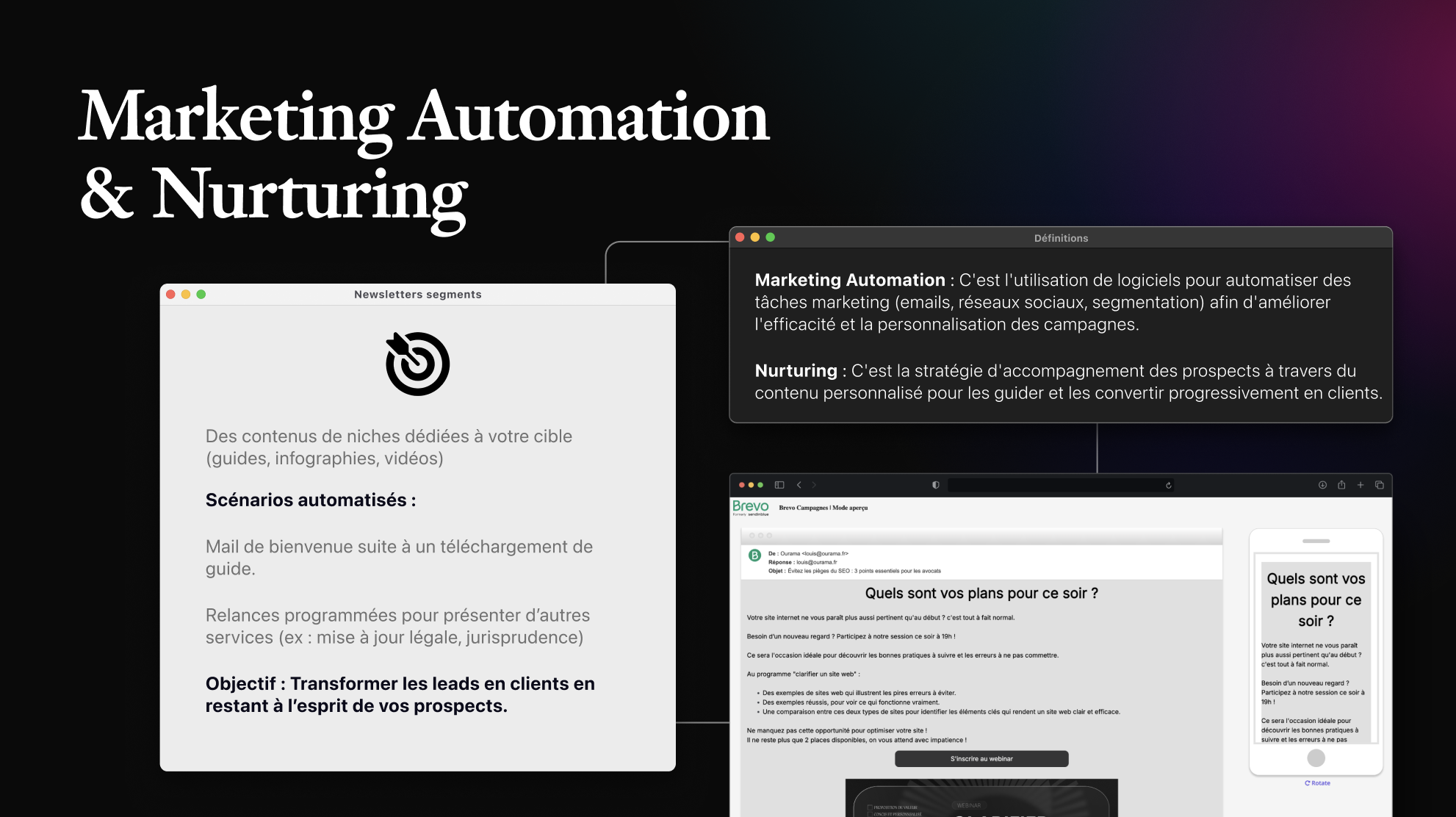
Using marketing automation makes it possible to send personalised emails to prospects at each stage of their journey. For example:
- A welcome email once someone downloads a guide.
- Regular follow-ups sharing legal updates or practical advice.
This feeds the relationship with prospects and turns them into clients over time.
How lawyers can use outbound marketing to find clients
- Mass emailing and cold calling are tightly regulated by law and require explicit consent. Personalised approaches, on the other hand, remain allowed as long as they follow the rules.
- On LinkedIn, accepting a connection request implies a tacit agreement to talk, but messages have to be respectful, relevant and matched to what the person needs.
- Attending professional events lets you build contacts face to face, which strengthens trust and makes later conversations easier. Good preparation and a quick follow-up make the most of these opportunities.
Why a website belongs at the centre of a lawyer's digital marketing
A website is the foundation of a lawyer's digital marketing. It has to be designed to be professional, attractive and functional.
Why a professional, optimised site matters
The site has to embody the credibility of the firm. A careful design, intuitive navigation and mobile compatibility are essential. It also has to be optimised for SEO so it reaches as far as it can in search engines.
The pages you cannot leave out
Here are the pages that matter:
- The team : describe the expertise of each lawyer, so visitors feel reassured.
- Client testimonials : genuine client feedback builds trust.
- Blog : a legal blog lets you share advice and sector news. You still have to write the right articles!
Calls to action, and turning visitors into clients
The main purpose of a website is to turn visitors into clients. It is critical to add clear calls to action: contact forms, free consultation, or online booking.
How lawyers can measure the return on their digital marketing
Measuring how well marketing works is essential if you want to know whether what you do actually produces results.
Tracking online performance
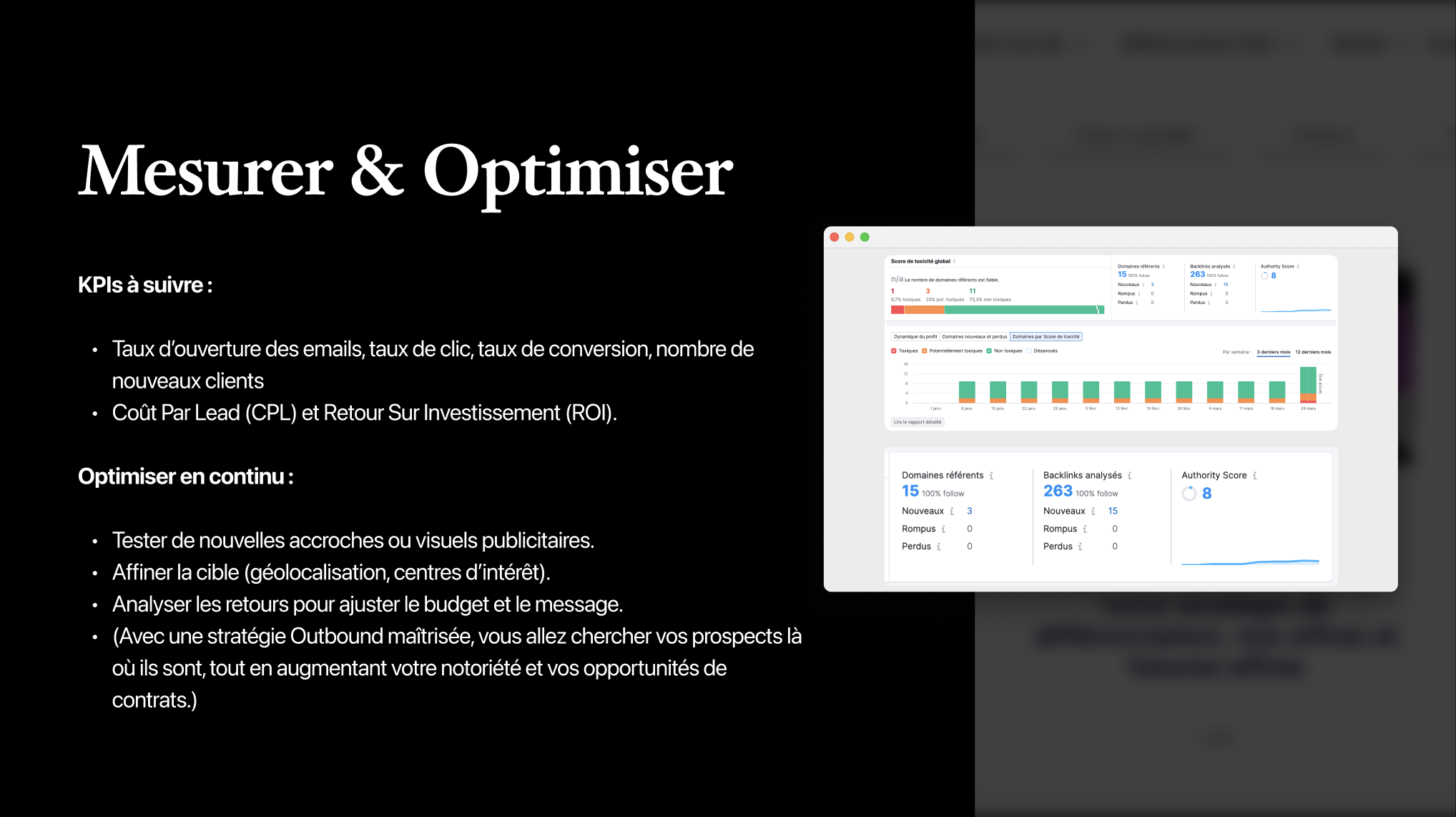
Tools such as Google Analytics track your web traffic, show which pages generate conversions and measure how well advertising campaigns perform.
The key KPIs to watch. A few KPIs are essential to measuring ROI:
- Conversion rate (how many visitors become leads or clients).
- Cost per lead (CPL), to gauge how well advertising campaigns perform.
- Social media engagement (likes, shares, comments).
A/B testing and adjusting the strategy
A/B tests compare how different versions of your messages perform, an email subject line or the layout of a landing page for instance. They are what lets you keep improving the strategy.
The digital marketing tools that work best for lawyers
Several digital marketing tools work particularly well for lawyers.
For more on this, feel free to download the full guide
SEO and content tools
Google Analytics, SEMrush, Ahrefs : these tools help you analyse SEO performance and identify the most searched keywords.
Prospecting and marketing automation tools
- Waalaxy and Lemlist : powerful tools for prospecting on LinkedIn and emailing, so you can target prospects automatically and efficiently.
- Reputation management tools : Google Business Profile, Trustpilot : platforms for collecting client reviews and improving your firm's visibility.
CRM tools
There are specialist tools (Hubspot, Karlia, Axonaut) and general ones (Monday, Salesforce and the like)
An article on the subject: https://www.ourama.fr/en/contenus/crm-avocat


.jpg)

.webp)